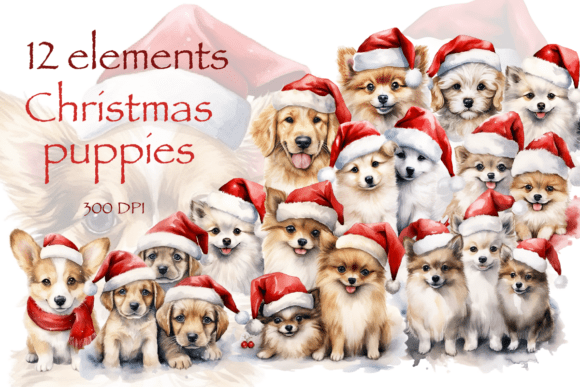
Review: Christmas Puppies Clipart for Embroidery
As a designer who spends more time staring at stitch simulations than I do sleeping, I have learned that not every cute graphic translates well to thread. We have all been there: you find an adorable image, imagine it on a holiday sweatshirt, and then watch in horror as the machine turns a puppy’s nose into a tangled mess of bobbin thread. That is why I approach new assets with a critical eye. Recently, I spent some time evaluating Christmas Puppies Clipart to see if it holds up under the needle or if it is just another pretty picture meant for screen-only use.
The first impression of this collection is undeniably warm. The mood is playful yet cozy, capturing that specific chaotic joy of the holiday season. From a layout perspective, the shapes are generally clean, which is the first green flag for any embroidery project. However, visual appeal on a screen does not guarantee stitching clarity. My job is to look past the pixels and see the potential stitch paths. Does the design rely on tiny, fragile details that will snap after one wash? Or is it robust enough for a commercial embroidery run? Let’s dig into how these illustrations perform in the real world.
From Screen to Stitch: Practical Application
I decided to test the viability of Christmas Puppies Clipart by mentally mapping it onto a few standard products I frequently produce for my small shop. The most obvious candidate was a custom embroidered tote bag. Tote bags are usually made from canvas or heavy cotton, which provides a stable foundation for fill stitches. The broader shapes in the puppy designs would sit beautifully on this fabric texture, allowing the thread colors to pop without sinking into the weave.
Another strong contender is holiday embroidery on sweatshirts. A fleece or cotton-blend sweatshirt requires a design that is not too dense, otherwise, the garment becomes stiff and uncomfortable. If the clipart elements are simplified correctly, they can work as a chest-left logo or a larger back print. I particularly liked the idea of using a single puppy element as a patch-style design on a sleeve. This approach minimizes the hoop size requirement and makes the finished product feel like a boutique item rather than mass-produced merchandise.
For Etsy sellers and craft business owners, versatility is key. These illustrations could easily transition into baby embroidery projects. Imagine a soft onesie with a subtle, small-scale puppy wearing a Santa hat. The key here is scale. You must ensure that the details are not so fine that they get lost on such a small canvas. If the design includes intricate fur textures, you might need to simplify them into satin stitch borders or solid fill areas to maintain clarity on delicate baby fabrics.
Navigating Technical Challenges
While the aesthetic is charming, we must address where Christmas Puppies Clipart might fail if not handled with care. The biggest risk lies in the transition from digital art to physical thread. Illustrations often contain gradients and soft edges that embroidery machines cannot replicate perfectly. If the design relies heavily on photo-realistic shading, it will likely require complex blend techniques or a high number of thread colors, which increases production time and cost.
You need to be cautious with small hoop sizes. If you are attempting to stitch a detailed scene onto a curved surface like a cap, the design needs to be compact and free of large, open areas that might cause puckering. Caps are tricky; the fabric is structured but limited in space. A design that looks balanced on a flat pillow cover might look cramped and messy on a dad hat. Always check the dimensions against your available hoop size before committing to a purchase or a client proof.
Fabric choice also dictates success. Dark fabric presents a challenge if the design lacks proper underlay or if the thread colors are not vibrant enough to contrast. A light brown puppy on a black hoodie might disappear if the stitch density is too low. Conversely, on thin fabric like a kitchen towel or a lightweight t-shirt, high stitch density can cause tearing or severe distortion. In these cases, using a cut-away stabilizer is non-negotiable, and you may need to reduce the overall stitch count to preserve the integrity of the garment.
Enhancing Product Value and Brand Trust
Why does the quality of your design asset matter? Because it directly impacts customer trust. When a buyer receives a handmade product, they are judging your professionalism based on the crispness of the embroidery. Sloppy edges, thread breaks, or unclear details signal a lack of attention to detail. Using well-structured Christmas Puppies Clipart ensures that your finished product looks polished. This consistency builds brand recognition. If your holiday collection features clean, well-digitized designs, customers are more likely to return for future seasonal items.
Furthermore, these assets can serve as excellent design assets for printable mockups. Before you even thread the machine, you can place the clipart on digital templates of mugs, shirts, or totes to gauge visual balance. This step saves time and materials. For digital product sellers, offering these as part of a bundle can increase the perceived value of your shop, provided you clarify the licensing terms clearly.
Designer Notes for Best Results
If you are planning to use this collection for commercial embroidery or personal gifts, here are my practical recommendations to ensure success:
- Test on scrap fabric first: Never run a new design directly on your final garment. Use a similar fabric weight and type to check for puckering or thread breaks.
- Check thread color contrast: View the design in grayscale. If the elements blend together without color, the design lacks sufficient contrast and may need editing.
- Review stitch density: High density looks rich but feels stiff. For apparel, aim for a lighter touch. For patches or pillows, you can go heavier.
- Inspect small details: Zoom in on the eyes and noses of the puppies. Are they satin stitches or tiny fills? Tiny fills can be problematic; consider converting them to satin stitches for better durability.
- Use proper stabilizer: Match your stabilizer to your fabric. Cut-away for knits and stretchy fabrics, tear-away for woven cottons.
- Confirm licensing: Before selling finished items or using the images in digital products, verify the license terms. Ensure you have the right to use the artwork for commercial purposes.
In conclusion, Christmas Puppies Clipart has strong potential for festive embroidery projects, provided you approach it with a technician’s mindset. It is not just about finding a cute image; it is about understanding how that image behaves under tension, on different textures, and within the constraints of your machine. By testing carefully and choosing the right applications, you can turn these illustrations into profitable, heartwarming products that customers will cherish. Whether you are creating a personalized gift for a neighbor or stocking your Etsy shop for the holiday rush, thoughtful preparation is the difference between a good product and a great one.