Santa Reindeer Christmas Town: A Designer’s Stitch Review
As embroidery designers and small business owners, we often scroll past hundreds of digital files before one catches our eye. It is not just about the subject matter; it is about the potential. When I first opened Santa Reindeer Christmas Town, my immediate reaction was not just to the festive theme, but to the structural integrity of the layout. This piece falls squarely into the category of Illustrations, which means it relies heavily on visual storytelling rather than simple monogramming or basic shapes. For those of us running a craft business or selling on Etsy, understanding how an illustration translates from screen to fabric is critical.
First Impressions and Visual Mood
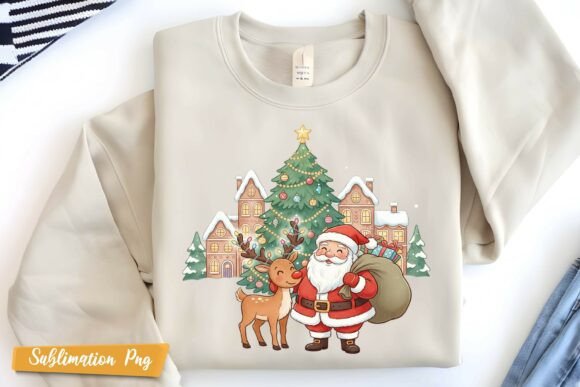
The design evokes a cozy, nostalgic holiday atmosphere. The composition balances the whimsical nature of reindeer with the structured charm of a winter town scene. From a reviewer’s perspective, the mood is warm and inviting, making it an excellent candidate for products meant to evoke comfort. However, aesthetic appeal is only half the battle. We must look at the line work. Does the design rely too heavily on tiny details that might get lost in the stitch? In this case, the balance between open space and detailed elements suggests it is designed with machine limitations in mind, though caution is still required.
When evaluating a machine embroidery design like this, I always look for clear separation between elements. If the reindeer antlers merge visually with the background buildings, you risk a muddy finished product. Santa Reindeer Christmas Town appears to maintain distinct zones, which is crucial for stitching clarity. This separation ensures that even when viewed from a distance, the subject matter remains recognizable, enhancing the professional look of your handmade product.
Real-World Application: The Tote Bag Test
To truly gauge the value of this file, I mentally placed it on a canvas tote bag. This is a staple item for many Etsy sellers and boutique owners during the holiday season. On a sturdy cotton canvas, the design would likely hold up well, provided the stitch density is managed correctly. A tote bag offers a large, flat surface, allowing the full scope of the town and characters to be appreciated without crowding.
Imagine a customer picking up this bag at a winter craft fair. The tactile quality of the threads against the fabric adds value that a printed image cannot match. The thread colors chosen will define the success here. Using traditional reds and greens might feel classic, but experimenting with metallic golds or icy blues could elevate the design into a modern holiday embroidery statement. The key is contrast. If the background buildings are too similar in tone to the thread color of the foreground elements, the depth of the illustration collapses.
Apparel and Wearable Challenges
Moving beyond accessories, let’s consider custom apparel. Placing this design on a sweatshirt requires careful thought regarding placement. The chest area is standard, but the width of the town scene might be too broad for smaller sizes. On a cap or hat, this design would likely fail unless significantly scaled down, which risks losing the intricate details of the reindeer and buildings. Curved surfaces distort embroidery, and complex illustrations rarely translate well to tight curves.
For baby embroidery projects, such as onesies or bibs, simplicity is usually king. While Santa Reindeer Christmas Town is charming, the level of detail might be overwhelming for a small garment. Furthermore, babies require softness. High-density fill stitches can create a stiff patch that irritates sensitive skin. If using this on baby items, I would recommend testing a lighter density setting or using an applique design technique where fabric pieces replace some of the dense stitching, reducing bulk while maintaining the visual impact.
Technical Considerations for Professional Results
Before loading this digital embroidery file into your machine, there are several practical steps every designer should take. First, always check the recommended hoop size. Trying to force a large illustration into a small hoop by shrinking it will result in lost detail and potential thread breaks. Conversely, enlarging it too much may expose gaps in the stitch pattern.
- Stabilizer Selection: For woven fabrics like cotton or linen, a cut-away stabilizer provides the best support for detailed illustrations. For stretchy knits used in t-shirts, a tear-away might suffice if the design is not too dense, but cut-away is safer for long-term durability.
- Fabric Texture: Avoid highly textured fabrics like heavy wool or bouclé for this type of design. The needle may struggle to penetrate evenly, and the texture can hide the fine lines of the running stitch or satin stitch outlines.
- Thread Contrast: Test the design in black and white on your computer screen. If the elements blend together in grayscale, they will likely blend together in thread. Adjust your color palette to ensure high visibility.
Navigating Density and Detail
One of the biggest risks with illustration-style designs is stitch density. If the software has generated excessive underlay or fill stitches, the fabric may pucker. This is particularly problematic on thin fabrics or layered garments. Always run a test stitch-out on scrap fabric identical to your final material. Inspect the back of the embroidery as well; excessive thread buildup can cause irritation and reduce the lifespan of the finished product.
Pay close attention to small corners and tiny lettering if present. Machine needles have a physical limit to how sharply they can turn. If Santa Reindeer Christmas Town includes small text or sharp architectural angles, these areas are prone to thread breaks or bird-nesting. A professional touch involves manually editing these nodes in your embroidery software to smooth out sharp turns before stitching.
Commercial Viability and Brand Consistency
For those using this in a craft business, consistency is key. Does this design fit your brand’s aesthetic? If your shop specializes in minimalist modern decor, a busy town scene might clash. However, for shops focused on traditional holiday cheer, this asset is a strong contender. It enhances buyer engagement because it tells a story. Customers are not just buying an embroidered item; they are buying a feeling of nostalgia and warmth.
When creating printable mockups for your online store, ensure the digital representation matches the physical reality. Over-saturating colors in photos can lead to customer disappointment. Show the texture of the stitches. Highlight the quality of the embroidered patch effect if applicable. Transparency builds trust, and trust drives sales in the competitive world of small shop product listings.
Finally, always confirm licensing terms. While many files allow for commercial use of finished physical items, selling the design assets themselves or using them in digital print-on-demand services may have restrictions. Protect your business by reading the fine print before listing your personalized gift options.
Final Verdict
Santa Reindeer Christmas Town is a robust choice for designers looking to add narrative depth to their holiday collections. It performs best on stable, medium-to-heavy weight fabrics where the details can shine without distortion. By respecting the technical limits of your machine and choosing the right materials, you can transform this digital file into a high-value commercial embroidery asset that delights customers and elevates your brand.